6 Best 12 Inch Dobsonian Reflector Telescope Models Compared (2026)
Compare 6 of the best 12 inch dobsonian reflector telescope options for aperture, portability, and beginner use, with pros, cons, and a buying guide.
 By Claire Whitaker
Updated November 21, 2026
 By Claire Whitaker
Updated November 2026
Shopping for a 12 inch dobsonian reflector telescope means balancing light-gathering power against how easily you can move and set up the scope. A 12-inch mirror collects far more light than a typical beginner scope, which opens up faint galaxies, nebulae, and star clusters that smaller instruments struggle to show. The picks below were chosen by comparing manufacturer specifications, brand reputation, and the patterns owners commonly describe, with attention to navigation aids, ease of setup, and how each model suits a particular kind of observer.
Our top picks at a glance
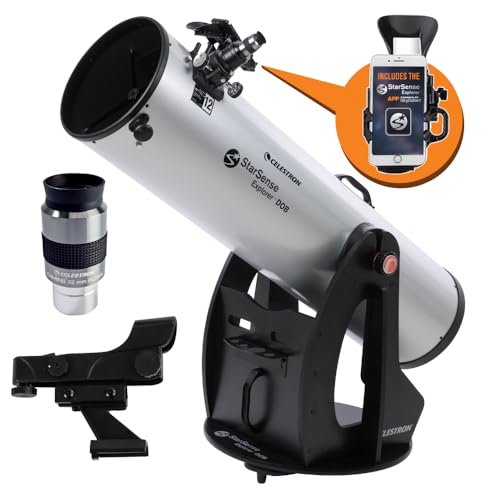
- 1TOP CHOICEBest overallCelestron StarSense Explorer 12" Smartphone Guided Dobsonian TelescopeView on Amazon
- 2
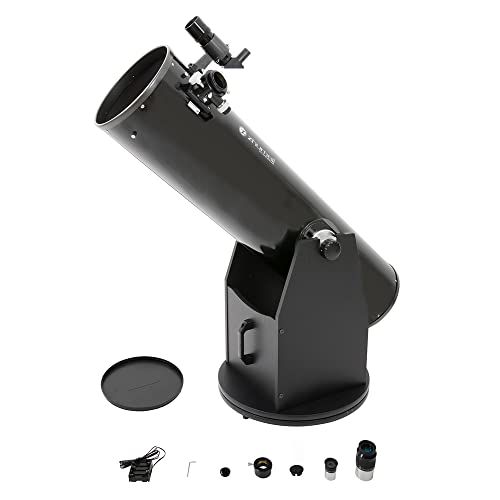 TOP CHOICEBest for beginners who want guidanceZhumell 10-inch Dobsonian Reflector TelescopeView on Amazon
- 3
 TOP CHOICEBest for tabletop observingCelestron FirstScope Signature Series Moon Tabletop Dobsonian TelescopeView on Amazon
- 4
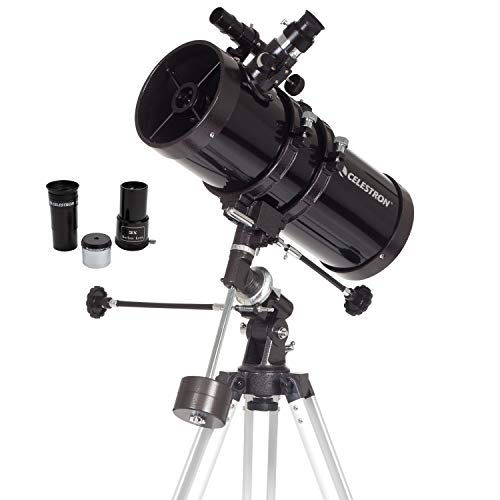 Best for planets and the Moon on a mountCelestron PowerSeeker 127EQ Reflector Telescope for Home AstronomyView on Amazon
- 5
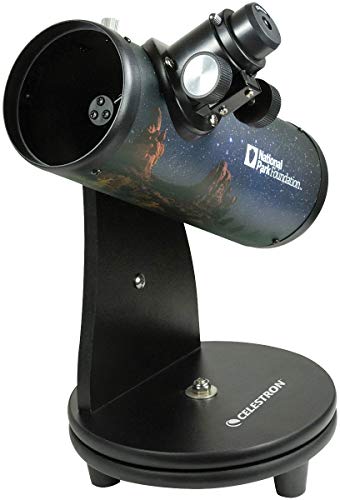 Best budget pickCelestron NPF FirstScope 76 Tabletop Dobsonian Telescope for BeginnersView on Amazon
- 6
 Best for compact grab-and-goNational Geographic 76MM Compact Reflector TelescopeView on Amazon
Our Top Picks
Quick Comparison
| Product | Best for | Key feature |
|---|---|---|
| Celestron StarSense Explorer 12″ Smartphone Guided Dobsonian Telescope | Finding deep-sky objects with phone guidance | StarSense Explorer sky navigation technology |
| Zhumell 10-inch Dobsonian Reflector Telescope | Large-aperture viewing on a budget-minded setup | Solid base with carry handle |
| Celestron FirstScope Signature Series Moon Tabletop Dobsonian Telescope | Lunar viewing from a table or shelf | Moon map wrap and lunar eBook |
| Celestron PowerSeeker 127EQ Reflector Telescope for Home Astronomy | Planets and the Moon with a stable mount | German equatorial mount with slow-motion controls |
| Celestron NPF FirstScope 76 Tabletop Dobsonian Telescope for Beginners | Starter tabletop observing | Compact 76mm Newtonian design |
| National Geographic 76MM Compact Reflector Telescope | Portable grab-and-go sessions | Compact reflector body |
Celestron StarSense Explorer 12″ Smartphone Guided Dobsonian Telescope
Celestron StarSense Explorer 12" Smartphone Guided Dobsonian Telescope | Massive 12" Aperture, StarSense Explorer Sky Navigation Technology, Manual Dobsonian Design, Faint Galaxy & Nebula Viewing
Best for: Observers who want the full 12-inch light grasp and help finding targets.
This is the model for someone who has seen the appeal of a large Dobsonian but is worried about locating faint objects in an unfamiliar sky. The smartphone-guided system is designed to reduce the trial-and-error that frustrates many newcomers.
Key specs
- 12-inch (300mm class) Newtonian reflector aperture
- Dobsonian alt-azimuth base
- StarSense Explorer smartphone sky-navigation system
Pros
- Large aperture shows many faint deep-sky targets
- Phone-based guidance speeds up finding objects
- Dobsonian mount is simple to operate by hand
Cons
- A large tube takes more room to store and transport
- Smartphone guidance depends on the app and your phone working well
Bottom line: Best suited to serious beginners who want the most aperture and some navigation help.
View on AmazonZhumell 10-inch Dobsonian Reflector Telescope
Zhumell – 10-inch Dobsonian Reflector Telescope – Large Aperture for Crisp, Bright Images – Solid Base Construction with Handle for Easy Transport – Ideal Astronomical Telescope
Best for: Observers who want a large-aperture Dobsonian without moving to the 12-inch class.
A 10-inch scope gathers substantially more light than a 6- or 8-inch model while staying somewhat easier to haul outdoors. It suits someone who expects to carry the telescope to a dark site occasionally.
Key specs
- 10-inch reflector aperture
- Dobsonian base with integrated handle
Pros
- Strong light grasp for the size
- Solid base construction for stability
- Handle makes transport easier
Cons
- Smaller aperture than the 12-inch class, so faint targets are less bright
- No built-in digital guidance
Bottom line: A good middle ground for people who want big aperture and easier portability.
View on AmazonCelestron FirstScope Signature Series Moon Tabletop Dobsonian Telescope
Celestron FirstScope Signature Series Moon Tabletop Dobsonian Telescope | Manual Tabletop Dobsonian Telescope with Moon Map Wrap, Great for Beginners, Compact & Portable, Includes Lunar eBook
Best for: Lunar viewing from a table or shelf with very little setup.
This compact model is aimed at people who want to look at the Moon and bright planets without a full outdoor session. It is a gentle introduction to the Dobsonian style.
Key specs
- Tabletop Dobsonian mount
- Moon map wrap included
- Lunar eBook included
Pros
- Very quick to set up on a table
- Moon map helps identify craters and features
- Lightweight and easy to move
Cons
- Limited aperture for deep-sky objects
- Not a true 12-inch instrument, so it is best judged as a starter
Bottom line: Ideal for a casual first look at the Moon rather than a 12-inch observing setup.
View on AmazonCelestron PowerSeeker 127EQ Reflector Telescope for Home Astronomy
Celestron PowerSeeker 127EQ Reflector Telescope for Home Astronomy | German Equatorial Mount, Bright Views of the Moon, Planets & Deep Sky, Slow-Motion Controls, Stable Tripod, Easy to Use
Best for: Planets and the Moon on a stable equatorial mount.
This is an equatorial-mounted reflector rather than a Dobsonian, which makes it a different tool for a different kind of observing. Owners generally describe it as a steady, approachable scope for bright targets.
Key specs
- 127mm reflector aperture
- German equatorial mount
- Slow-motion controls on both axes
Pros
- Equatorial mount tracks objects smoothly
- Slow-motion controls help precise centering
- Stable tripod
Cons
- Aperture is well below 12 inches
- Equatorial setup takes longer to learn than a Dobsonian
Bottom line: Better for planetary work and tracking than for chasing faint deep-sky objects.
View on AmazonCelestron NPF FirstScope 76 Tabletop Dobsonian Telescope for Beginners
Celestron NPF FirstScope 76 Tabletop Dobsonian Telescope for Beginners | 76mm Newtonian Reflector, Tabletop Dobsonian Mount, Moon & Planet Viewing, Compact Desktop Design, Grab-and-Go Astronomy
Best for: A low-cost starting point with a simple tabletop design.
A 76mm Newtonian on a tabletop Dobsonian mount is a modest instrument, but it is easy to use and useful for learning the sky before investing in a larger aperture.
Key specs
- 76mm Newtonian reflector
- Tabletop Dobsonian mount
Pros
- Compact and simple to use
- Good for Moon and planet viewing
- Fits on a desk or small table
Cons
- Far less light than a 12-inch mirror
- Deep-sky targets will appear faint and small
Bottom line: A sensible first step for someone not yet ready for a full-size Dobsonian.
View on AmazonNational Geographic 76MM Compact Reflector Telescope
National Geographic 76MM Compact Reflector Telescope
Best for: Portable grab-and-go observing sessions.
This compact reflector is designed for quick outings. Its small footprint makes it easy to carry to a park or backyard without a large case.
Key specs
- 76mm reflector aperture
- Compact, portable body
Pros
- Easy to carry and store
- Quick to set up
- Good for bright targets
Cons
- Small aperture limits faint-object viewing
- Not comparable in light grasp to a 12-inch scope
Bottom line: Pick this for portability first and a 12-inch mirror second.
View on AmazonBuying Guide
Aperture and light-gathering power
Aperture is the main reason to buy a 12 inch dobsonian reflector telescope. Doubling the diameter of a mirror roughly quadruples its light-collecting area, which makes faint galaxies and nebulae noticeably brighter. Compare the stated aperture of each model before anything else.
Good picks for this: Celestron StarSense Explorer 12″ Smartphone Guided Dobsonian Telescope, Zhumell 10-inch Dobsonian Reflector Telescope
Navigation and finding objects
Large scopes show more, but only if you can find the target. Digital guidance or a good star chart makes a real difference for newcomers.
Good picks for this: Celestron StarSense Explorer 12″ Smartphone Guided Dobsonian Telescope, Celestron FirstScope Signature Series Moon Tabletop Dobsonian Telescope
Size, weight, and transport
A 12-inch tube and base are heavy and bulky. Check the overall dimensions and whether you will carry it alone, drive it to a site, or keep it set up at home.
Good picks for this: Zhumell 10-inch Dobsonian Reflector Telescope, National Geographic 76MM Compact Reflector Telescope
Mount type
Dobsonians use a simple alt-azimuth base that is easy to move by hand. Equatorial mounts track the sky but take longer to learn. Decide which tradeoff you prefer.
Good picks for this: Celestron PowerSeeker 127EQ Reflector Telescope for Home Astronomy, Celestron NPF FirstScope 76 Tabletop Dobsonian Telescope for Beginners
Stability and base construction
A wobbly base blurs the view, especially at high magnification. Look for a sturdy base and smooth motion in both axes.
Good picks for this: Zhumell 10-inch Dobsonian Reflector Telescope, Celestron PowerSeeker 127EQ Reflector Telescope for Home Astronomy
Intended targets
If you mainly want the Moon and planets, a smaller scope may be enough. If you want galaxies and nebulae, prioritize aperture and dark skies.
Good picks for this: Celestron FirstScope Signature Series Moon Tabletop Dobsonian Telescope, Celestron StarSense Explorer 12″ Smartphone Guided Dobsonian Telescope
Durability and care
Keep mirrors clean and protected, store the scope covered, and avoid storing it somewhere humid. Let the tube adjust to outdoor temperatures before observing so the image settles.
Good picks for this: Zhumell 10-inch Dobsonian Reflector Telescope, Celestron NPF FirstScope 76 Tabletop Dobsonian Telescope for Beginners
FAQ
Is a 12 inch dobsonian reflector telescope good for beginners?
Yes, if you are willing to learn the sky and can handle a large, heavy instrument. The aperture is excellent, but a guidance system or star chart helps a lot in the first few sessions.
How much can I see with a 12-inch reflector?
Expect bright planets, the Moon, many star clusters, and a range of galaxies and nebulae from a dark site. Fine detail depends on sky conditions and your eyes, so results vary.
Do I need a special mount for a Dobsonian?
No. Dobsonians sit on a simple alt-azimuth base that works without a tripod in many designs. Check whether the model you choose includes its own base.
Is a 12-inch scope too heavy to move?
It can be. Many owners carry the tube and base separately. Consider how far you need to move it and whether a helper is available.
What is the difference between a Dobsonian and an equatorial reflector?
A Dobsonian uses a simple alt-azimuth base and is easy to point by hand. An equatorial mount tracks the sky more smoothly but takes longer to set up and learn.
Should I buy a smaller scope first?
That depends on your goals and how much you plan to travel with the telescope. A smaller instrument is easier to start with, while a 12-inch scope rewards observers who can dedicate time to it.
Conclusion
For most people wanting the full light grasp of a 12 inch dobsonian reflector telescope, the Celestron StarSense Explorer 12″ Smartphone Guided Dobsonian Telescope is the most direct match, thanks to its guidance system. Those wanting a large aperture with easier portability may prefer the Zhumell 10-inch model. Lunar and tabletop observers will do better with the Celestron FirstScope Signature Series Moon, while planetary viewers may favor the Celestron PowerSeeker 127EQ. Budget and portability-focused buyers can look at the Celestron NPF FirstScope 76 and the National Geographic compact reflector.
For more background on choosing between designs, see Dobsonian or Newtonian Telescope (2026): Which Should You Choose? and Reflector vs Refractor Telescope: Which Is Better? (2026). If you plan to try photography, Taking Photos with a Dobsonian Telescope: 3 Best Picks for Beginners (2026) covers what to expect.
Sources
- Background on telescope optics, light collection, and observing the Moon and planets (nasa.gov)
- Guidance on dark-sky viewing sites and observing etiquette in national parks (nps.gov)
- Beginner resources on telescope types, aperture, and choosing an observing setup
About Claire Whitaker
Claire Whitaker is part of our editorial team and reviews and edits our telescopes & stargazing guides, checking product details against manufacturer specifications and owner feedback.
About the author
Claire Whitaker writes reviews and buying guides for Astronomy Site.