Camera Apps for Astrophotography: 6 Best Picks for Smart Telescopes (2026)
Compare the best camera apps for astrophotography, from smart telescope apps to WiFi eyepiece apps. See key specs, pros, cons and who each one suits.
 By Ava Thornton
Updated November 2026
Choosing the right camera app for astrophotography matters more than most beginners expect. The app controls exposure, stacking, tracking and file handling, and it often decides whether a faint nebula shows up as a smear or a clean image. This guide compares six products that pair a camera with an app, judged on how well each handles night-sky imaging, how automated its tracking and processing are, how easy it is to set up outdoors, and how consistently owners report good results.
Our top picks at a glance
- 1TOP CHOICEBest overallZWO Seestar S30 Pro Smart Telescope, App-Controlled AstrophotographyView on Amazon
- 2
 TOP CHOICEBest for wide-field Milky Way workDWARFLAB Dwarf 3 Smart Telescope, App-Controlled Astrophotography CameraView on Amazon
- 3
 TOP CHOICEBest for ultra-portable travelDWARFLAB Dwarf Mini Smart Telescope, Portable Astronomy TelescopeView on Amazon
- 4
 Best for observing with a phone-free eyepiece setupDenash WiFi Telescope Camera EyepieceView on Amazon
- 5
 Best for learning the Seestar S50 ProUSER GUIDE FOR ZWO SEESTAR S50 PRO: The Complete Step-by-Step GuideView on Amazon
- 6
 Best for advanced Seestar S50 Pro usersZWO Seestar S50 Pro Smart Telescope Made Practical (2026 Edition)View on Amazon
Our Top Picks
Quick Comparison
| Product | Best for | Key feature |
|---|---|---|
| ZWO Seestar S30 Pro Smart Telescope | Overall app-driven deep-sky imaging | 4K dual camera with auto tracking and GoTo |
| DWARFLAB Dwarf 3 Smart Telescope | Wide-field Milky Way and wildlife shots | 4K auto-tracking with AZ and EQ modes |
| DWARFLAB Dwarf Mini Smart Telescope | Travel and quick setups | Lightweight body with auto GoTo and light pollution filter |
| Denash WiFi Telescope Camera Eyepiece | Recording what you see through an existing telescope | WiFi streaming and recording to a phone app |
| USER GUIDE FOR ZWO SEESTAR S50 PRO | Learning the Seestar app workflow | Step-by-step coverage of the app and equatorial mode |
| ZWO Seestar S50 Pro Smart Telescope Made Practical (2026 Edition) | Moving from beginner to advanced app use | Setup-through-processing guide for the S50 Pro |
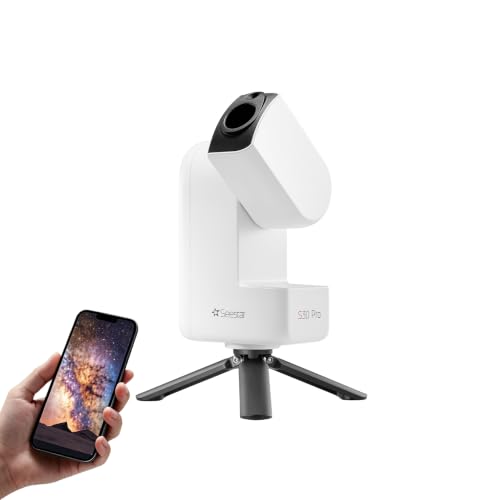
ZWO Seestar S30 Pro Smart Telescope, App-Controlled Astrophotography
ZWO Seestar S30 Pro Smart Telescope, App-Controlled Astrophotography | 4K Dual Camera, Auto Tracking & GoTo, One-Tap Capture & Processing, Milky Way & Star Trail, Deep Sky & Wide-Field Imaging
Best for: Overall app-driven deep-sky imaging
This is aimed at beginners and intermediate imagers who want the app to handle alignment, tracking, capture and basic processing, so they can focus on choosing targets and framing.
Key specs
- Dual-camera design with a 4K sensor for imaging
- Automatic tracking and GoTo targeting through the companion app
- One-tap capture and on-device processing
- Suited to Milky Way, star trail and deep-sky targets
Pros
- Minimal setup, with the app guiding alignment and targeting
- Stacking and processing happen without a separate computer
- Works for both wide-field and deep-sky targets
Cons
- Automation limits manual control for experienced imagers
- Results depend heavily on sky quality and target choice
Bottom line: A strong first choice for someone who wants the most hands-off path to deep-sky images from the app.
View on AmazonDWARFLAB Dwarf 3 Smart Telescope, App-Controlled Astrophotography Camera
DWARFLAB Dwarf 3 Smart Telescope, App-Controlled Astrophotography Camera | Portable 3lb Design, 4K Auto-Tracking, AZ/EQ Modes, Built-in Processing, Astronomy Shooting, Wildlife and Panorama Imaging
Best for: Wide-field Milky Way and wildlife shots
Suited to photographers who want one device for night sky, landscape and wildlife, and who like a flexible AZ or EQ mounting option.
Key specs
- Portable body listed at about 3 lb
- 4K auto-tracking through the app
- Selectable AZ and EQ modes
- Built-in processing for astronomy, wildlife and panorama modes
Pros
- Multiple shooting modes beyond astronomy
- Portable enough for field use
- Mode switching gives flexibility as skills grow
Cons
- Feature breadth means a learning curve in the app
- Wide-field tracking is less precise than a dedicated equatorial mount for long deep-sky exposures
Bottom line: Best for someone who wants one portable app-based camera for both the night sky and daytime or wildlife subjects.
View on AmazonDWARFLAB Dwarf Mini Smart Telescope, Portable Astronomy Telescope
DWARFLAB Dwarf Mini Smart Telescope – 1.85lb Portable Astronomy Telescope | App Control, Auto GOTO, AZ/EQ Modes, 90-Second Exposure, Light Pollution Filter, 360° Pivot Freedom, Built-in Processing
Best for: Travel and quick setups
A good fit for observers who carry gear to dark-sky sites or travel often and want a short setup time.
Key specs
- Listed at about 1.85 lb
- App control with automatic GoTo
- AZ and EQ modes
- Listed 90-second exposure capability
- Built-in light pollution filter and 360° pivot
Pros
- Very light for backpacking or air travel
- Built-in light pollution filter helps in suburban skies
- Pivot freedom simplifies pointing
Cons
- Smaller body means less room for accessories
- Limited for long, demanding deep-sky projects
Bottom line: The right choice when weight and portability come first and you mainly want quick, satisfying sessions.
View on AmazonDenash WiFi Telescope Camera Eyepiece
Denash WiFi Telescope Camera Eyepiece,WiFi Electronic Eyepiece Support 5MP 4K Video/Camera Recording Via App,Telescope Microscope Accessories for Astrophotography,Birds Watching
Best for: Recording what you see through an existing telescope
Works for people who already own a telescope and want to share views or capture video through a WiFi connection to a phone or tablet.
Key specs
- WiFi connection for live view and recording through an app
- Listed 5MP still and 4K video capability
- Designed as an eyepiece-style accessory for telescopes and microscopes
Pros
- Turns an existing telescope into a shareable imaging setup
- Useful for daytime and wildlife observation as well
- Simple phone-based viewing
Cons
- Not a dedicated astrophotography camera, so faint-object results are limited
- Image quality depends on the telescope and eyepiece pairing
Bottom line: Best for telescope owners who want WiFi viewing and recording more than deep-sky stacking.
View on AmazonUSER GUIDE FOR ZWO SEESTAR S50 PRO: The Complete Step-by-Step Guide
USER GUIDE FOR ZWO SEESTAR S50 PRO: The Complete Step-by-Step Guide to Smart Astrophotography, Dual-Camera Imaging, Equatorial Mode, the Seestar App, and Better Night-Sky Results
Best for: Learning the Seestar app workflow
Aimed at new Seestar owners who want a structured walkthrough of the app, dual-camera imaging and equatorial mode before their first session.
Key specs
- Covers the Seestar app, dual-camera imaging and equatorial mode
- Step-by-step format for setup and capture
Pros
- Clear sequence from unboxing to first image
- Helps avoid common alignment and framing mistakes
- Useful reference during the first few sessions
Cons
- A guide, not hardware, so it adds no imaging capability by itself
- Coverage can go stale when app updates change menus
Bottom line: A sensible companion for anyone who will use a Seestar S50 Pro and wants a guided start.
View on AmazonZWO Seestar S50 Pro Smart Telescope Made Practical (2026 Edition)
ZWO Seestar S50 Pro Smart Telescope Made Practical (2026 Edition): The Complete Beginner-to-Advanced Guide to Setup, App Mastery, Astrophotography, … (The Practical Astrophotography Library)
Best for: Moving from beginner to advanced app use
Suited to owners who have finished the basics and want to refine stacking, processing and capture habits across the full app.
Key specs
- Beginner-to-advanced coverage of setup, app use and astrophotography
- Part of a practical astrophotography library series
Pros
- Goes beyond first-session steps into processing and workflow
- Organized for progressive learning
- Pairs well with the Seestar hardware it targets
Cons
- Assumes some familiarity, so it may overwhelm a true beginner
- Like any guide, it reflects the app version at publication
Bottom line: Pick this once the basics are comfortable and you want deeper control over your Seestar workflow.
View on AmazonBuying Guide
Automation and tracking
Check how the app handles alignment, GoTo and tracking. Automated tracking is the single biggest factor in whether long exposures stay sharp. Apps that auto-align quickly help beginners, while manual control suits experienced users who want to tune every step.
Good picks for this: ZWO Seestar S30 Pro Smart Telescope, DWARFLAB Dwarf 3 Smart Telescope
Sensor and resolution
Manufacturers list sensor size and resolution, and 4K is the figure most often cited for these devices. Higher resolution helps when you crop or stack, but sensor sensitivity and noise control matter just as much for faint targets.
Good picks for this: ZWO Seestar S30 Pro Smart Telescope, DWARFLAB Dwarf 3 Smart Telescope
Portability and weight
If you observe at remote dark sites, weigh the total kit. Devices listed around 2 lb or less are easy to carry, while heavier units suit a fixed backyard setup better.
Good picks for this: DWARFLAB Dwarf Mini Smart Telescope, DWARFLAB Dwarf 3 Smart Telescope
Processing and stacking
Look for on-device or in-app stacking. Built-in processing saves time because you do not need to move files to a computer, but check whether you can export raw data if you plan to refine images later.
Good picks for this: ZWO Seestar S30 Pro Smart Telescope, DWARFLAB Dwarf Mini Smart Telescope
Compatibility with existing gear
If you already own a telescope, an eyepiece-style WiFi camera may be more practical than a complete smart telescope. Confirm the fitting and whether the app supports your phone or tablet.
Good picks for this: Denash WiFi Telescope Camera Eyepiece
Learning resources
A capable app is only useful if you know its workflow. Guides can shorten the learning curve, especially around alignment, exposure settings and processing steps.
Good picks for this: USER GUIDE FOR ZWO SEESTAR S50 PRO, ZWO Seestar S50 Pro Smart Telescope Made Practical (2026 Edition)
Light pollution
Urban and suburban skies wash out faint targets. Some devices include light pollution filters, and narrowband or dual-band options help in cities. Check specs before buying if you shoot from home.
Good picks for this: DWARFLAB Dwarf Mini Smart Telescope, ZWO Seestar S30 Pro Smart Telescope
FAQ
What is a camera app for astrophotography?
It is software that controls a camera for night-sky imaging. It typically handles exposure, tracking or guiding, stacking several frames, and processing the result into a final image.
Do I need a dedicated astrophotography camera?
Not always. Smart telescopes bundle a camera with an app, while a phone or DSLR can work with the right app. Dedicated devices usually simplify tracking and stacking for beginners.
Can I use a camera app with my phone?
Some apps support phone cameras for constellations, moon and bright star-field shots. Faint deep-sky targets generally need longer exposures and tracking than a phone can provide alone.
What features matter most in an astrophotography app?
Look for automatic alignment, tracking, long-exposure support, stacking and manual control options. Clear file export is also useful if you plan to refine images later.
Is an app-based smart telescope good for beginners?
Many beginners find them easier than traditional setups because the app handles alignment and capture. The trade-off is less manual control, which experienced imagers may want.
How do I improve results with any astrophotography app?
Choose dark skies, check focus carefully, keep exposures consistent and stack multiple frames. Following a dedicated guide can help you learn the settings for your specific app.
Conclusion
For most beginners, the ZWO Seestar S30 Pro Smart Telescope offers the most automated path from app to finished image. The DWARFLAB Dwarf 3 suits people who want wide-field and wildlife modes in one portable unit, while the DWARFLAB Dwarf Mini favors travel. The Denash WiFi Telescope Camera Eyepiece fits telescope owners who want to record and share views. The two Seestar S50 Pro guides help you learn and then master the app workflow. Match the pick to your sky, your travel habits and how much control you want.
Sources
- Background on night-sky observing, sky conditions and light pollution research (nasa.gov)
- Resources from the American Astronomical Society on amateur observing and astronomy education
- Guidance on light pollution, dark-sky sites and how sky quality affects astrophotography
Related reading
- iPhone Camera App for Astrophotography: Settings, Steps and Setup Tips
- iPhone Camera Settings for Astrophotography: A Step-by-Step Guide
- iPhone 13 Camera Astrophotography: Step-by-Step Guide to Night Sky Shots
- What Is the Best Nikon Camera Lens for Astrophotography? Top Picks
- What Is a Wireless CCD Camera for Astrophotography? Uses and Tips

About Ava Thornton
Ava focuses on practical advice for telescopes & stargazing: what matters before you buy, what to skip, and how to get more out of what you already own.
About the author
Ava Thornton writes reviews and buying guides for Astronomy Site.