7 Best Telescopes for Deep Sky Viewing Compared for 2026
Compare 7 telescopes for deep sky viewing, from beginner reflectors to smart telescopes, with pros, cons and buying tips for galaxies and nebulae.
 By Audrey Hayes
Updated November 18, 2026
 By Audrey Hayes
Updated November 2026
Choosing a telescope for deep sky observing comes down to aperture, mount stability and how much setup you want to do. Deep sky objects such as galaxies, nebulae and star clusters are faint, so light-gathering power matters most, followed by a mount that tracks smoothly enough to keep targets centered. This list compares seven options across those criteria, from simple manual reflectors to fully automated and smart telescopes, based on manufacturer specifications and patterns in owner feedback.
Our top picks at a glance
- 1TOP CHOICEBest overallCelestron NexStar 8SEView on Amazon
- 2
 TOP CHOICEBest for beginners on a budgetCelestron AstroMaster 130EQView on Amazon
- 3
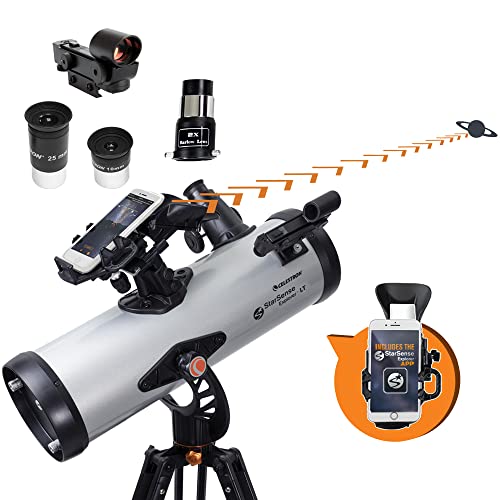 TOP CHOICEBest for no-fuss setupCelestron StarSense Explorer LT 114AZView on Amazon
- 4
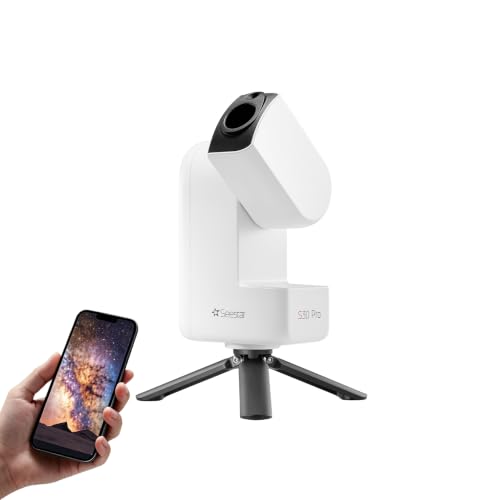 Best for automated astrophotographyZWO Seestar S30 ProView on Amazon
- 5
 Best for live stacked viewsUNISTELLAR OdysseyView on Amazon
- 6
 Best for electronic eyepiece viewingUNISTELLAR Odyssey PRO Smart Telescope, Nikon Electronic Eyepiece, BlaView on Amazon
- 7
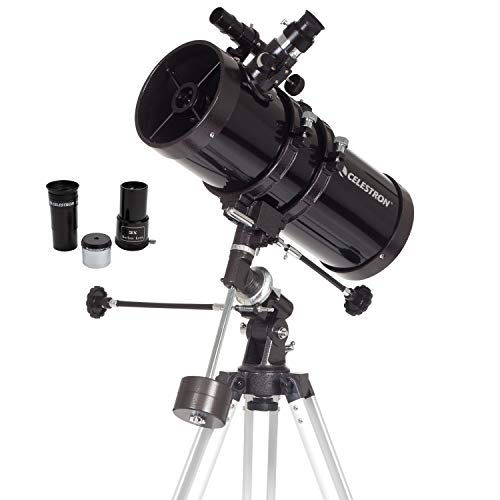 Best for a stable manual mountCelestron PowerSeeker 127EQ Reflector Telescope for Home Astronomy | GView on Amazon
Our Top Picks
| Product | Best for | Key feature |
|---|---|---|
| Celestron NexStar 8SE | Serious visual deep sky | 8-inch GoTo mount |
| Celestron AstroMaster 130EQ | Beginner deep-sky views | 130mm German equatorial |
| Celestron StarSense Explorer LT 114AZ | Smartphone-guided starting | App sky navigation |
| ZWO Seestar S30 Pro | Automated astrophotography | Auto tracking and capture |
| UNISTELLAR Odyssey | Live stacked views | Autofocus and stacking |
| UNISTELLAR Odyssey PRO | Electronic eyepiece viewing | Nikon electronic eyepiece |
| Celestron PowerSeeker 127EQ | Stable manual observing | Slow-motion mount controls |
Celestron NexStar 8SE
Celestron NexStar 8SE Computerized Telescope – Schmidt-Cassegrain | Fully Automated GoTo Mount with SkyAlign, Large 8" SCT Optics, Visual & Astroimaging Ready, Deep-Sky & Planets, 40k+ Objects
Best for: Serious visual deep sky observing with GoTo convenience
This is a fit for observers who want the largest aperture in this list and do not want to hunt for targets by hand. Its computerized mount can locate objects from a large built-in catalog.
Pros
- 8-inch aperture gathers substantial light for faint galaxies and nebulae
- Automated GoTo mount with SkyAlign alignment and a large object database
Cons
- Heavier and bulkier to transport than smaller scopes
Celestron AstroMaster 130EQ
Celestron AstroMaster 130EQ Telescope for Deep-Sky Beginners | Large 130mm Optics, Bright Moon & Deep-Sky Views, Perfect First Telescope, German Equatorial Mount with Easy Manual Controls
Best for: Beginner deep-sky views on a manual German equatorial mount
A practical first telescope for people who want to learn the sky by hand and see brighter deep sky targets without a large investment in accessories.
Pros
- 130mm optics show bright deep-sky objects and the Moon well
- Equatorial mount with manual controls teaches sky navigation
Cons
- Manual tracking requires periodic adjustment during longer sessions
Celestron StarSense Explorer LT 114AZ
Celestron StarSense Explorer LT 114AZ Newtonian Smartphone Guided Telescope | Smartphone App Sky Navigation, Manual Reflector Telescope, Beginner Deep-Sky Telescope, Bright Celestial Views, Portable
Best for: Smartphone-guided setup for newcomers
Suited to beginners who find star-hopping frustrating and would rather let a phone app guide them to targets in the first few sessions.
Pros
- Smartphone app helps identify and align on objects in the sky
- Portable Newtonian design is easy to carry outdoors
Cons
- Smaller 114mm aperture shows fainter deep sky objects less clearly
ZWO Seestar S30 Pro
ZWO Seestar S30 Pro Smart Telescope, App-Controlled Astrophotography | 4K Dual Camera, Auto Tracking & GoTo, One-Tap Capture & Processing, Milky Way & Star Trail, Deep Sky & Wide-Field Imaging
Best for: Automated deep sky astrophotography from a phone or tablet
Aimed at people who want photographs of nebulae and galaxies with minimal manual processing, controlled entirely through an app.
Pros
- Auto tracking and GoTo with one-tap capture and processing
- Dual camera system supports both wide-field and deep sky imaging
Cons
- Results depend on the app workflow rather than traditional eyepiece viewing
UNISTELLAR Odyssey
UNISTELLAR Odyssey Smart Telescope, 85 mm, App Viewing, Black | Autofocus, live image stacking, automatic tracking for planets and deep sky, tripod included
Best for: Live stacked views of deep sky targets on a phone screen
A good match for observers who want to see faint targets build up in real time without a long dark-adaptation wait.
Pros
- Autofocus, automatic tracking and live image stacking for deep sky targets
- Tripod included for a ready-to-use setup
Cons
- Viewing depends on the app and screen rather than a traditional eyepiece
Related reading
- CCD Camera Telescope Astrophotography: A Beginner's Guide to Deep-Sky Images
- 7 Best Telescopes for Deep Sky Photography of 2026: Picks Compared
- 6 Best Telescopes for Viewing Deep Sky Objects: Picks Compared
- Top 7 Deep Sky Astrophotography Cameras for Serious Imaging in 2026
- Top 7 Barlow Lens for Astrophotography Compared for Planets and Deep Sky
- Top 3 CCD Cameras for Astrophotography Compared for Deep-Sky Imaging (2026)
About Audrey Hayes
Audrey Hayes is part of our editorial team and reviews and edits our telescopes & stargazing guides, checking product details against manufacturer specifications and owner feedback.
About the author
Audrey Hayes writes reviews and buying guides for Astronomy Site.