4 Best Wide Field Binoculars for Astronomy (2026)
Looking for wide field binoculars for astronomy? Compare four picks by field of view, magnification and stability to find the right pair for constellations and
 By Audrey Hayes
Updated November 18, 2026
 By Audrey Hayes
Updated November 2026
Wide field binoculars for astronomy let you take in whole constellations, star clusters and the Milky Way in a single view, which a telescope at high power usually cannot do. This list compares four models against three criteria: field of view in degrees, magnification and how steady the image stays when held by hand. Each pick is matched to a specific stargazing need so you can choose by use case rather than by name alone.
Our top picks at a glance
- 1TOP CHOICEBest overallCelestron SkyMaster Pro ED 7×50 Binoculars for Wide Night-Sky ViewsView on Amazon
- 2
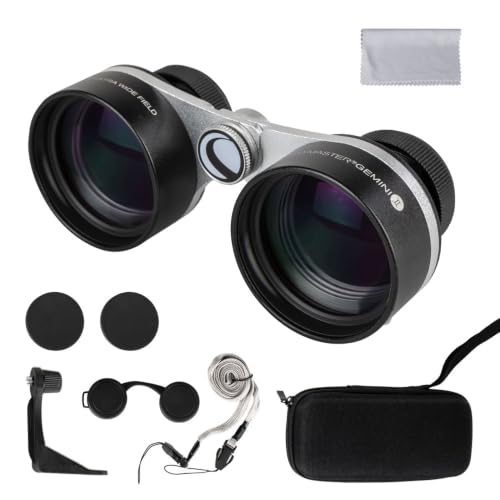 Best for meteor and comet sweepsCelestron SkyMaster Gemini 2×40 Ultra-Wide Low-Power Astronomy BinocularView on Amazon
- 3
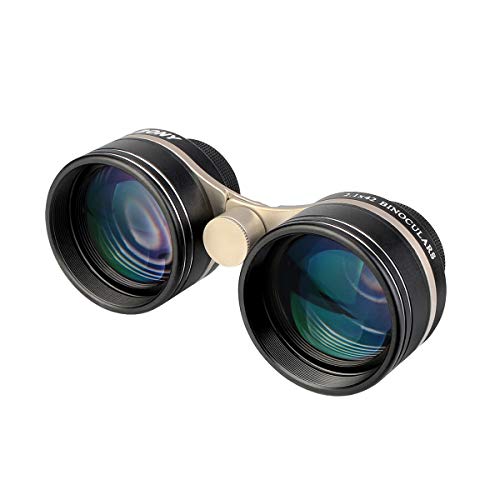 Best for very wide constellation viewsSVBONY SV407 Astronomy Binoculars 2.1x42mm, Wide Angle for StargazingView on Amazon
- 4
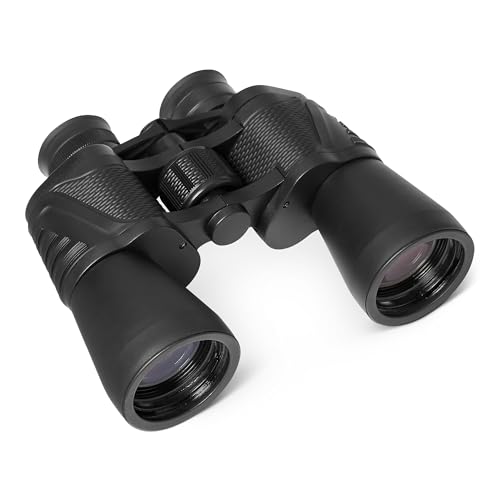 Best budget pick for general sky viewingAmazon Basics 7×50 High Power Binoculars for AdultsView on Amazon
Our Top Picks
Quick Comparison
| Product | Best for | Key feature |
|---|---|---|
| Celestron SkyMaster Pro ED 7×50 | Overall stargazing | ED glass, 7.4° field |
| Celestron SkyMaster Gemini 2×40 | Meteors and comets | 24° field of view |
| SVBONY SV407 2.1×42 | Whole constellations | 26° field, waterproof |
| Amazon Basics 7×50 | Budget general viewing | Tripod compatible, FMC optics |
Celestron SkyMaster Pro ED 7×50 Binoculars for Wide Night-Sky Views
Celestron SkyMaster Pro ED 7×50 Binoculars for Wide Night-Sky Views | ED Glass for Sharp Views, XLT Fully Multi-Coated Optics, Waterproof & Fogproof, Rubber Armored, Wide 7.4° Field of View
Best for: Overall stargazing with a balance of wide view and sharp detail.
This model suits observers who want one pair for constellations, star clusters and the Milky Way without the shaking that higher magnification brings.
Pros
- ED glass helps keep star images sharp toward the edge of the field.
- Wide 7.4° field of view frames large star patterns comfortably.
Cons
- At 50 mm aperture and 7x, it is heavier to hold steady than smaller pairs.
Celestron SkyMaster Gemini 2×40 Ultra-Wide Low-Power Astronomy Binocular
Celestron SkyMaster Gemini 2×40 Ultra-Wide Low-Power Astronomy Binocular | Ideal for Meteors and Comets, 24° Field of View to See Whole Constellations, Fully Multi-Coated, Bright Steady Handheld View
Best for: Meteor and comet sweeps across large areas of sky.
Owners who want to scan the whole sky at once, rather than study one object, will get the most from its very low power and 24° field.
Pros
- 24° field of view takes in entire constellations at a glance.
- Low magnification keeps the image bright and steady when held by hand.
Cons
- Its 2x power will not resolve fine detail on planets or the Moon.
SVBONY SV407 Astronomy Binoculars 2.1x42mm, Wide Angle for Stargazing
SVBONY SV407 Astronomy Binoculars 2.1x42mm, Wide Angle for Stargazing | for Star and Constellations Viewing, 26° Field of View, FMC Coating, IPX6 Waterproof, Opera Glasses, 2x Low-magnification
Best for: Very wide constellation views for casual sky walks.
Beginners and families who want an easy, lightweight pair for pointing at the big shapes of the sky will find it approachable.
Pros
- 26° field of view is among the widest in this list.
- IPX6 waterproofing suits damp evenings and dew-prone nights.
Cons
- Low 2.1x magnification shows only the brightest deep-sky objects.
Amazon Basics 7×50 High Power Binoculars for Adults
Amazon Basics 7×50 High Power Binoculars for Adults, Ideal for Stargazing & Long-Distance Viewing, Wide Field of View, FMC Optics, Tripod Compatible, Black
Best for: Budget general sky viewing with a standard 7×50 layout.
Shoppers who want a conventional 7×50 pair for stargazing and everyday use, without premium glass, may find it a practical starting point.
Pros
- Fully multi-coated optics help brighten the image in dim skies.
- Tripod compatibility allows steadier viewing for longer sessions.
Cons
- Owners often report less edge sharpness than ED-glass models.
Buying Guide
Field of View
Field of view, given in degrees, tells you how much sky fits in one look. Pairs in the 20° to 26° range suit constellation and meteor work, while 7×50 models with roughly 7° to 8° views suit smaller star fields.
Good picks for this: Celestron SkyMaster Gemini 2×40, SVBONY SV407 2.1×42
Magnification and Steadiness
Higher magnification narrows the field and magnifies hand shake. Low powers such as 2x or 7x are easier to hold steady without a mount.
Good picks for this: Celestron SkyMaster Pro ED 7×50, Amazon Basics 7×50 High Power
Optical Coatings and Glass
Fully multi-coated lenses reduce light loss, which helps faint stars stand out. ED glass is aimed at reducing color fringing and keeping edge stars sharper.
Good picks for this: Celestron SkyMaster Pro ED 7×50
Weather Resistance and Mounting
Waterproof and fog-resistant bodies handle dew and damp nights. Tripod threads let you stabilize the binoculars for long sessions.
Good picks for this: SVBONY SV407 2.1×42, Amazon Basics 7×50 High Power
FAQ
Are wide field binoculars good for astronomy beginners?
Yes, low-power models with wide fields are often recommended as a first step because they are easy to point and show large sky patterns clearly.
What magnification is best for wide field astronomy binoculars?
Most observers use between 2x and 7x. Lower numbers give a wider view and steadier image, while 7x is a common middle ground.
Do I need a tripod for these binoculars?
Not always, but a tripod helps at higher magnification or for extended viewing sessions. Manufacturers often specify tripod compatibility on the product page.
Related reading
- Zeiss Binoculars for Astronomy: 5 Best Picks Compared (2026)
- What Size Binoculars for Astronomy? A Practical Guide
- Used Astronomy Binoculars for Sale: 5 Best Picks Compared
About Audrey Hayes
Audrey Hayes is part of our editorial team and reviews and edits our telescopes & stargazing guides, checking product details against manufacturer specifications and owner feedback.
About the author
Audrey Hayes writes reviews and buying guides for Astronomy Site.