7 Best Telescopes for Deep Sky Viewing: Best Picks Compared for 2026
Looking for the best telescope for deep sky viewing? We compare seven models on aperture, mount, and ease of use to help you find galaxies and nebulae.
 By Audrey Hayes
Updated November 18, 2026
 By Audrey Hayes
Updated November 2026
Finding the best telescope for deep sky viewing comes down to three things: aperture, which determines how much faint light you collect; mount stability, which keeps fuzzy targets steady at high magnification; and how easily you can find objects in the first place. The seven picks below range from simple manual reflectors to fully automated GoTo systems, so you can match the telescope to your patience level and your sky.
Our top picks at a glance
- 1TOP CHOICEBest overallCelestron CGEM II 11" Schmidt-Cassegrain Telescope with GoTo EQ MountView on Amazon
- 2
 TOP CHOICEBest for beginners on a budgetCelestron StarSense Explorer LT 114AZ Newtonian Smartphone Guided TelescopeView on Amazon
- 3
 TOP CHOICEBest for first-time deep-sky observersCelestron AstroMaster 130EQ Telescope for Deep-Sky BeginnersView on Amazon
- 4
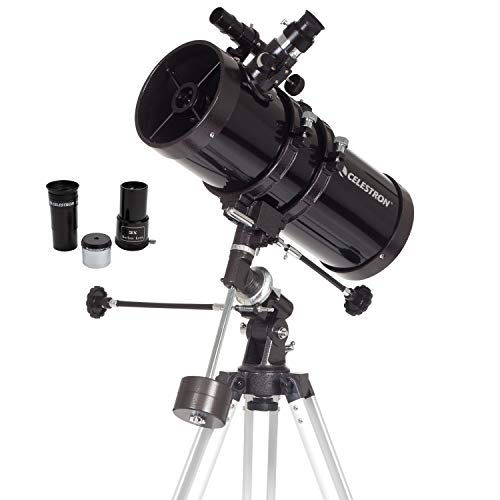 Best for portable home viewingCelestron PowerSeeker 127EQ Reflector Telescope for Home AstronomyView on Amazon
- 5
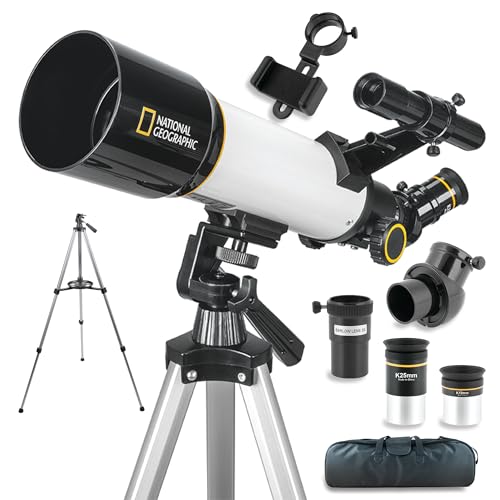 Best for kids and casual useNational Geographic Sky View 70mm Refractor Telescope with Panhandle MountView on Amazon
- 6
 Best for automated object findingCelestron NexStar 8SE Computerized Telescope – Schmidt-Cassegrain | FuView on Amazon
- 7
 Best for hands-off smart viewingUNISTELLAR Odyssey Smart Telescope, 85 mm, App Viewing, Black | AutofoView on Amazon
Our Top Picks
Quick Comparison
| Product | Best for | Key feature |
|---|---|---|
| Celestron CGEM II 11″ SCT | Serious deep-sky observing | 11″ aperture, GoTo mount |
| Celestron StarSense Explorer LT 114AZ | Beginners on a budget | Smartphone sky navigation |
| Celestron AstroMaster 130EQ | First-time deep-sky observers | 130mm reflector, equatorial mount |
| Celestron PowerSeeker 127EQ | Portable home viewing | Stable German equatorial mount |
| National Geographic Sky View 70mm | Kids and casual use | Panhandle mount, 2 eyepieces |
| Celestron NexStar 8SE | Automated object finding | SkyAlign GoTo, 40k+ objects |
| UNISTELLAR Odyssey Smart Telescope | Hands-off smart viewing | Autofocus, live image stacking |
Celestron CGEM II 11″ Schmidt-Cassegrain Telescope with GoTo EQ Mount
Celestron CGEM II 11" Schmidt-Cassegrain Telescope with GoTo EQ Mount | Outstanding Light Gathering, Sharp Planetary & Deep-Sky Views, Precision GoTo Equatorial Mount, Visual & Astroimaging Ready
Best for: Serious deep-sky observing with maximum light gathering
This is aimed at observers who want the most faint-galaxy and nebula detail a home setup can deliver and are willing to set up a larger, heavier rig.
Pros:
- 11-inch aperture gathers substantially more light than smaller reflectors
- Precision GoTo equatorial mount simplifies locating deep-sky targets
Cons:
- Heavier and bulkier to transport than beginner models
Celestron StarSense Explorer LT 114AZ Newtonian Smartphone Guided Telescope
Celestron StarSense Explorer LT 114AZ Newtonian Smartphone Guided Telescope | Smartphone App Sky Navigation, Manual Reflector Telescope, Beginner Deep-Sky Telescope, Bright Celestial Views, Portable
Best for: Beginners on a budget who want help finding objects
Suited to new observers who would rather use a phone app for sky navigation than learn star-hopping right away.
Pros:
- Smartphone app guides you to objects without a computer mount
- Compact and easy to carry outside
Cons:
- 114mm aperture limits faint deep-sky detail compared with larger scopes
Celestron AstroMaster 130EQ Telescope for Deep-Sky Beginners
Celestron AstroMaster 130EQ Telescope for Deep-Sky Beginners | Large 130mm Optics, Bright Moon & Deep-Sky Views, Perfect First Telescope, German Equatorial Mount with Easy Manual Controls
Best for: First-time deep-sky observers who want a larger aperture
A good fit for someone moving up from a small refractor who wants brighter views of star clusters and bright nebulae.
Pros:
- 130mm optics show more deep-sky detail than 70mm or 114mm scopes
- German equatorial mount tracks objects as the sky turns
Cons:
- Manual controls take practice to use smoothly
Celestron PowerSeeker 127EQ Reflector Telescope for Home Astronomy
Celestron PowerSeeker 127EQ Reflector Telescope for Home Astronomy | German Equatorial Mount, Bright Views of the Moon, Planets & Deep Sky, Slow-Motion Controls, Stable Tripod, Easy to Use
Best for: Portable home viewing with a stable mount
For backyard observers who want a sturdy equatorial platform and slow-motion controls for fine tracking.
Pros:
- Slow-motion controls help keep faint targets centered
- Stable tripod reduces wobble at higher magnification
Cons:
- Setup takes longer than a simple alt-azimuth mount
National Geographic Sky View 70mm Refractor Telescope with Panhandle Mount
National Geographic Sky View 70mm Refractor Telescope with Panhandle Mount | 400mm focal length, 2 eyepieces, 3x Barlow lens, smartphone adapter, beginner astronomy for kids and adults
Best for: Kids and casual use
Designed for younger observers and families who mainly want the Moon, bright planets and a few brighter deep-sky objects.
Pros:
- Includes two eyepieces and a 3x Barlow lens
- Lightweight panhandle mount is easy for children to handle
Cons:
- 70mm aperture gives limited faint deep-sky detail
Related reading
- 6 Best Telescopes for Viewing Deep Sky Objects: Picks Compared
- 7 Best Telescopes for Deep Sky Photography of 2026: Picks Compared
- 6 Best Gso 2 2x Ed Barlow Lens Compared for Planetary and Deep-Sky Viewing
- CCD Camera Telescope Astrophotography: A Beginner's Guide to Deep-Sky Images
About Audrey Hayes
Audrey Hayes is part of our editorial team and reviews and edits our telescopes & stargazing guides, checking product details against manufacturer specifications and owner feedback.
About the author
Audrey Hayes writes reviews and buying guides for Astronomy Site.