7 Best Telescope Eyepieces for Deep Sky Objects (2026)
Compare 7 telescope eyepieces for deep sky objects, from wide-field 32mm and 40mm models to zoom and 2-inch options. See which fits your scope and viewing style
 By Audrey Hayes
Updated November 18, 2026
 By Audrey Hayes
Updated November 2026
Choosing a telescope eyepiece for deep sky objects comes down to three things: how wide the field of view is, how much eye relief you get, and whether the eyepiece suits your telescope’s focal ratio and barrel size. Deep sky targets like star clusters, galaxies and nebulae are faint and spread out, so low magnification and wide apparent fields usually show them best. The picks below are sorted by fit with those criteria.
Our top picks at a glance
- 1TOP CHOICEBest overallCelestron Omni 32mm Telescope EyepieceView on Amazon
- 2
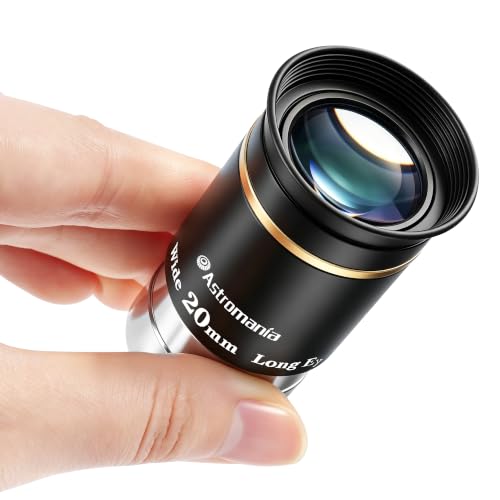 TOP CHOICEBest for ultra-wide framingAstromania Telescope Eyepiece 1.25" Goldline 66° 20mmView on Amazon
- 3
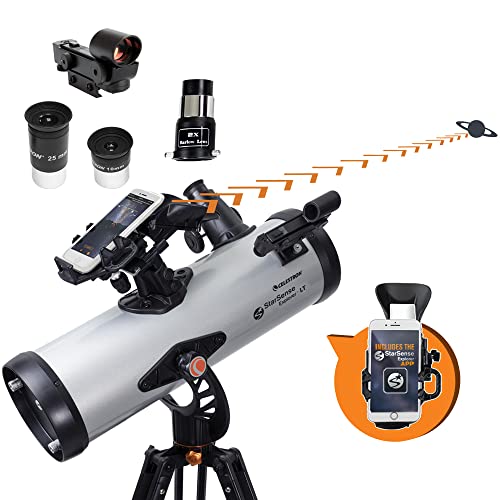 TOP CHOICEBest for a beginner telescope kitCelestron StarSense Explorer LT 114AZ Newtonian TelescopeView on Amazon
- 4
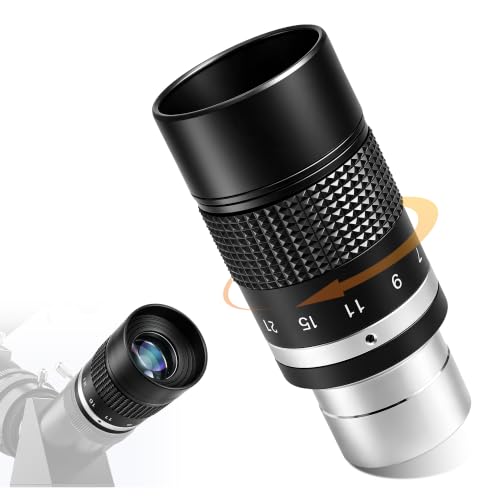 Best for variable magnificationAstromania Zoom Eyepiece FMC 7 to 21mm 1.25 InchView on Amazon
- 5
 Best for a 130mm reflectorCelestron AstroMaster 130EQ TelescopeView on Amazon
- 6
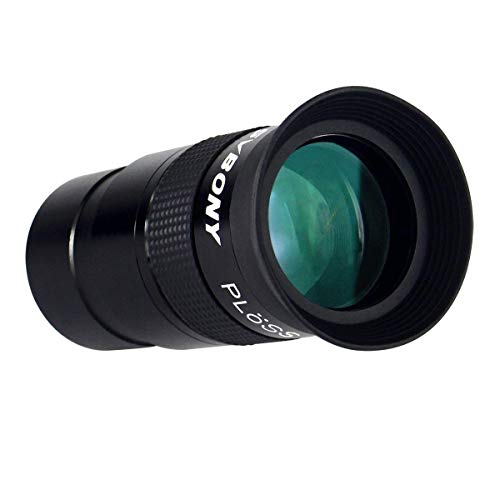 Best for a wide 40° fieldSVBONY Telescope Eyepiece 40mm Plössl 1.25"View on Amazon
- 7
 Best for large-aperture 2-inch useExplore Scientific 52 Degree 40mm Waterproof Eyepiece, 2 Inch Argon PuView on Amazon
Our Top Picks
| Product | Best for | Key feature |
|---|---|---|
| Celestron Omni 32mm | Overall deep-sky use | 4-element Plössl design |
| Astromania 20mm Goldline | Ultra-wide framing | 66° apparent field |
| Celestron StarSense Explorer LT 114AZ | Beginner telescope kit | Smartphone sky navigation |
| Astromania Zoom 7–21mm | Variable magnification | Single-eyepiece zoom range |
| Celestron AstroMaster 130EQ | 130mm reflector owners | Large 130mm optics |
| SVBONY 40mm Plössl | Wide-field star clusters | 40° field of view |
| Explore Scientific 40mm 52° | 2-inch focusers | Long eye relief |
Celestron Omni 32mm Telescope Eyepiece
Celestron Omni 1.25" 32mm Telescope Eyepiece for Expansive Star-Field Views | Wide Deep-Sky Views, 4-Element Plössl Design, Fully Multi-Coated Optics, Sharp High-Contrast Views, Blackened Lens Edges
Best for: wide deep-sky views in a standard 1.25-inch barrel.
This suits owners of most beginner and intermediate refractors and reflectors who want a dependable all-round wide-field eyepiece.
Pros
- Fully multi-coated optics for good light transmission
- Blackened lens edges reduce stray light
Cons
- Field is narrower than 60°-plus designs
Astromania Telescope Eyepiece 1.25″ Goldline 66° 20mm
Astromania Telescope Eyepiece 1.25" Goldline 66° Ultra Wide Angle Lens 20mm | HD FMC Telescope Accessory, Long Eye Relief, Wider UWA Telescope Lense, For Planets Deep Sky Astronomy Objects, Filter Thr
Best for: ultra-wide framing of large star fields and open clusters.
Observers who want the Milky Way or large nebulae to fill the view will get the most from its 66° apparent field.
Pros
- Long eye relief suits eyeglass wearers
- Wide apparent field frames large targets
Cons
- Edge sharpness can drop in slower telescopes
Celestron StarSense Explorer LT 114AZ Newtonian Telescope
Celestron StarSense Explorer LT 114AZ Newtonian Smartphone Guided Telescope | Smartphone App Sky Navigation, Manual Reflector Telescope, Beginner Deep-Sky Telescope, Bright Celestial Views, Portable
Best for: a beginner telescope kit that helps locate deep-sky targets.
This is aimed at newcomers who want a complete reflector with app-guided pointing rather than a stand-alone eyepiece.
Pros
- Smartphone app helps find objects quickly
- Portable build for backyard sessions
Cons
- Smaller 114mm aperture limits faint galaxy detail
Astromania Zoom Eyepiece FMC 7 to 21mm 1.25 Inch
Astromania Zoom Eyepiece, FMC Zoom 7 to 21mm Telescope Eyepiece 1.25 Inch | Metal Telescope Accessory, For Moon Planets Deep-Sky Astronomy Objects, FMC Telescope Lense Zoom Eyepiece, Visual Observatio
Best for: variable magnification without swapping eyepieces.
It fits observers who want to test several powers on a single target, from wide clusters at the low end to tighter nebula detail at the high end.
Pros
- Continuous zoom covers a useful power range
- Metal barrel feels sturdy
Cons
- Zoom designs usually give less sharpness than fixed-focal-length eyepieces
Celestron AstroMaster 130EQ Telescope
Celestron AstroMaster 130EQ Telescope for Deep-Sky Beginners | Large 130mm Optics, Bright Moon & Deep-Sky Views, Perfect First Telescope, German Equatorial Mount with Easy Manual Controls
Best for: pairing a larger 130mm reflector with wide-field eyepieces.
It is designed for beginners who want a larger light-gathering mirror on a German equatorial mount for tracking deep-sky objects.
Pros
- 130mm optics gather more light than smaller scopes
- Equatorial mount helps with tracking
Cons
- Manual setup takes practice
SVBONY Telescope Eyepiece 40mm Plössl 1.25″
SVBONY Telescope Eyepiece 40mm, 1.25" Plossl Telescope Lens, 40° Wide FOV | FMC Coating, Optics 4 Element, Wide-Field Viewing, Telescope Accessory for Lunar, Star Clusters, Nebulas and Deep Sky Target
Best for: wide-field views of star clusters and large nebulae.
This suits observers with slower scopes who want a generous 40° field at low power.
Pros
- 40° field frames clusters well
- Four-element design for balanced views
Cons
- Narrower field than the 66° Astromania option
Related reading
- 6 Best Telescopes for Viewing Deep Sky Objects: Picks Compared
- CCD Camera Telescope Astrophotography: A Beginner's Guide to Deep-Sky Images
- 7 Best Telescopes for Deep Sky Photography of 2026: Picks Compared
- Binoculars Astronomy Deep Sky Objects: A Step-by-Step Guide for Beginners
About Audrey Hayes
Audrey Hayes is part of our editorial team and reviews and edits our telescopes & stargazing guides, checking product details against manufacturer specifications and owner feedback.
About the author
Audrey Hayes writes reviews and buying guides for Astronomy Site.