6 Best Telescopes for Viewing Deep Sky Objects: Picks Compared
Looking for the best telescope for viewing deep sky objects? Compare six picks by aperture, mount, and ease of use to match your observing goals.
 By Audrey Hayes
Updated November 18, 2026
 By Audrey Hayes
Updated November 2026
The best telescope for viewing deep sky objects gathers enough light to show faint galaxies, nebulae, and star clusters, and holds them steady long enough to see detail. The criteria here are aperture (light-gathering power), mount type, ease of finding objects, and how well each setup suits a beginner or a growing observer. Each pick below is drawn from manufacturer specifications and common owner feedback patterns.
Our top picks at a glance
- 1TOP CHOICEBest overallCelestron NexStar 8SE Computerized Telescope – Schmidt-CassegrainView on Amazon
- 2
 TOP CHOICEBest for beginners on a budgetCelestron StarSense Explorer LT 114AZ Newtonian Smartphone Guided TelescopeView on Amazon
- 3
 TOP CHOICEBest for a first big-aperture scopeCelestron AstroMaster 130EQ Telescope for Deep-Sky BeginnersView on Amazon
- 4
 Best for hands-off object findingCelestron NexStar Evolution 8" WiFi TelescopeView on Amazon
- 5
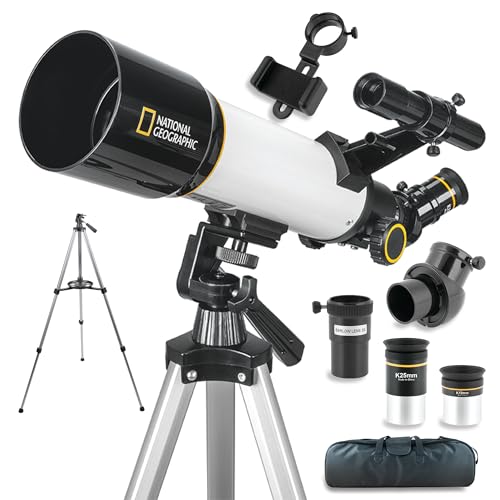 Best for kids and family viewingNational Geographic Sky View 70mm Refractor Telescope with Panhandle MountView on Amazon
- 6
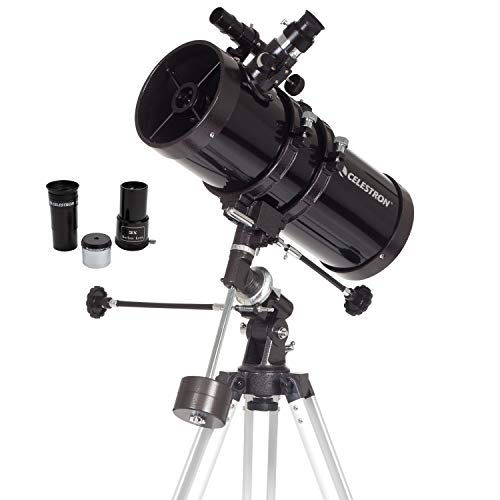 Best for learning the sky manuallyCelestron PowerSeeker 127EQ Reflector Telescope for Home AstronomyView on Amazon
Our Top Picks
Quick Comparison
| Product | Best for | Key feature |
|---|---|---|
| Celestron NexStar 8SE | Serious deep-sky observing | 8″ SCT with GoTo mount |
| Celestron StarSense Explorer LT 114AZ | Beginners using a phone | Smartphone sky navigation |
| Celestron AstroMaster 130EQ | Bright deep-sky views | 130mm reflector, EQ mount |
| Celestron NexStar Evolution 8″ WiFi | Automated object location | WiFi control, built-in battery |
| National Geographic Sky View 70mm | Family and youth viewing | Panhandle mount, 2 eyepieces |
| Celestron PowerSeeker 127EQ | Learning the sky manually | German equatorial mount |
Celestron NexStar 8SE Computerized Telescope – Schmidt-Cassegrain
Celestron NexStar 8SE Computerized Telescope – Schmidt-Cassegrain | Fully Automated GoTo Mount with SkyAlign, Large 8" SCT Optics, Visual & Astroimaging Ready, Deep-Sky & Planets, 40k+ Objects
Best for: Serious deep-sky observing with a large aperture
This suits observers who want the most light-gathering power in a fully automated package. The 8-inch Schmidt-Cassegrain optics and computerized GoTo mount are built to locate thousands of objects from a database of over 40,000.
Pros
- Large 8″ aperture reveals faint galaxies and nebulae
- GoTo mount with SkyAlign makes finding targets quick
Cons
- Heavier and bulkier to transport than smaller scopes
Celestron StarSense Explorer LT 114AZ Newtonian Smartphone Guided Telescope
Celestron StarSense Explorer LT 114AZ Newtonian Smartphone Guided Telescope | Smartphone App Sky Navigation, Manual Reflector Telescope, Beginner Deep-Sky Telescope, Bright Celestial Views, Portable
Best for: Beginners on a budget who want guided sky navigation
This is aimed at newcomers who would rather learn the sky with a phone app guiding the alignment. The 114mm reflector collects enough light for bright deep-sky targets like the Orion Nebula and star clusters.
Pros
- Smartphone app walks you to targets step by step
- Portable Newtonian design sets up quickly
Cons
- Faint galaxies look dim from light-polluted suburbs
Celestron AstroMaster 130EQ Telescope for Deep-Sky Beginners
Celestron AstroMaster 130EQ Telescope for Deep-Sky Beginners | Large 130mm Optics, Bright Moon & Deep-Sky Views, Perfect First Telescope, German Equatorial Mount with Easy Manual Controls
Best for: A first big-aperture scope with manual controls
This suits beginners who want more aperture than a typical starter scope and are willing to learn a manual equatorial mount. The 130mm optics show more faint detail than 70mm or 90mm designs.
Pros
- 130mm aperture gives brighter deep-sky views
- Equatorial mount with slow-motion controls aids tracking
Cons
- Manual setup takes practice to master
Celestron NexStar Evolution 8″ WiFi Telescope
Celestron NexStar Evolution 8" WiFi Telescope for Deep-Sky Views | WiFi Telescope Control, Automatically Locates Objects, Bright Deep-Sky & Planet Views, Built-in Battery, Great for Camping
Best for: Hands-off object finding with WiFi control
This is for observers who want a large aperture with automated pointing and wireless control from a phone or tablet. The built-in battery makes it practical for camping trips away from mains power.
Pros
- WiFi control and automatic object location
- Built-in battery supports portable use
Cons
- Higher setup complexity than manual scopes
National Geographic Sky View 70mm Refractor Telescope with Panhandle Mount
National Geographic Sky View 70mm Refractor Telescope with Panhandle Mount | 400mm focal length, 2 eyepieces, 3x Barlow lens, smartphone adapter, beginner astronomy for kids and adults
Best for: Kids and family viewing
This suits families and younger observers who want a simple, lightweight refractor for the Moon, bright planets, and brighter deep-sky objects. It includes two eyepieces and a 3x Barlow lens.
Pros
- Lightweight panhandle mount is easy to aim
- Includes eyepieces, a Barlow lens, and a smartphone adapter
Cons
- 70mm aperture limits faint galaxy detail
Celestron PowerSeeker 127EQ Reflector Telescope for Home Astronomy
Celestron PowerSeeker 127EQ Reflector Telescope for Home Astronomy | German Equatorial Mount, Bright Views of the Moon, Planets & Deep Sky, Slow-Motion Controls, Stable Tripod, Easy to Use
Best for: Learning the sky manually on a stable mount
This is for backyard observers who want a 127mm reflector on a German equatorial mount and are happy to star-hop with a finder. Slow-motion controls help keep objects centered at higher magnification.
Pros
- 127mm aperture shows bright nebulae and star clusters
- Stable tripod and slow-motion controls aid tracking
Cons
- No automated object finding
Related reading
- 6 Best Gso 2 2x Ed Barlow Lens Compared for Planetary and Deep-Sky Viewing
- CCD Camera Telescope Astrophotography: A Beginner's Guide to Deep-Sky Images
- Top 7 Deep Sky Astrophotography Cameras for Serious Imaging in 2026
About Audrey Hayes
Audrey Hayes is part of our editorial team and reviews and edits our telescopes & stargazing guides, checking product details against manufacturer specifications and owner feedback.
About the author
Audrey Hayes writes reviews and buying guides for Astronomy Site.