Deep Sky Astrophotography Camera Compared: 7 Best Picks for 2026
Compare 7 deep sky astrophotography cameras by sensor, cooling, and use case. Find the right cooled or smart camera for your telescope and night sky targets.
 By astronomysite editorial team
Updated November 7, 2026

As an Amazon Associate I earn from qualifying purchases. This page may contain affiliate links.
Choosing a deep sky astrophotography camera comes down to matching the sensor, cooling, and software to the faint targets you want to capture: galaxies, nebulae, and star clusters that are often too dim to see by eye through a telescope. Most buyers want a camera that gathers light efficiently, keeps thermal noise low over long exposures, and connects cleanly to a laptop or mount. This guide looks at seven options across three categories: cooled monochrome and color cameras for dedicated telescope setups, a smart telescope with built-in imaging, and a planetary-focused camera for lunar and planetary work. Each pick is grounded in published specifications, brand reputation, and patterns that owners commonly report, rather than hands-on testing.
Our Top Picks
Quick Comparison
| Product | Best for | Key feature |
|---|---|---|
| SVBONY SV405CC Astrophotography Camera | Entry-level cooled deep sky imaging | IMX294 sensor with thermoelectric cooling |
| ZWO Seestar S30 Pro Smart Telescope | Push-button deep sky and wide-field imaging | Built-in GoTo, auto tracking, and processing |
| SVBONY SV605CC Cooled Color Astrophotography Camera | Cooled color imaging with a larger sensor | 9MP IMX533 sensor with double-layer cooling |
| DWARFLAB Dwarf 3 Smart Telescope | Portable, all-in-one astrophotography | Lightweight body with 4K auto-tracking |
| SVBONY SC571CC Cooled Color Astronomy Camera | Large-sensor deep sky imaging | IMX571 APS-C sensor with front-window glass heater |
| Celestron NexImage 20 Solar System Imager | Lunar and planetary imaging | 20MP back-illuminated sensor with built-in autoguiding |
| SVBONY SV705C Telescope Camera Eyepiece | Planets plus deep sky on a budget-friendly sensor | IMX585 sensor in a 1/1.2″ frame |
SVBONY SV405CC Astrophotography Camera, Cooled Telescope Eyepiece IMX294
SVBONY SV405CC Astrophotography Camera, Cooled Telescope Eyepiece IMX294 | High-Sensitivity 4/3" Color Sensor 11.7MP USB 3.0 HCG Mode, Cooling Power Steady, Cooled Camera for Deep Sky Astrophotography
Who it’s for: Beginners moving from DSLR or webcam imaging into cooled deep sky work with a standard telescope and laptop setup.
Key specs
- IMX294 CMOS sensor, 4/3-inch format
- Color sensor with USB 3.0 connection
- Thermoelectric cooling to reduce sensor noise on long exposures
Pros
- Cooling helps keep dark current and amp glow down during multi-minute exposures.
- Fits the eyepiece-style body many telescope users already know.
- Large sensor relative to many entry cooled cameras, giving a wider field.
Cons
- Requires a computer, stacking software, and a capable mount for good results.
- Color sensor means filter-based narrowband work is less efficient than with a mono camera.
ZWO Seestar S30 Pro Smart Telescope, App-Controlled Astrophotography
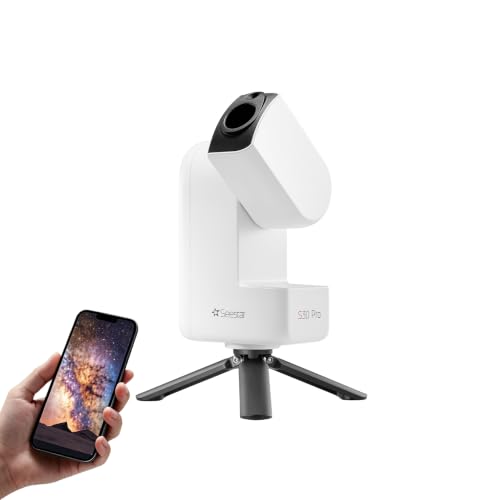
ZWO Seestar S30 Pro Smart Telescope, App-Controlled Astrophotography | 4K Dual Camera, Auto Tracking & GoTo, One-Tap Capture & Processing, Milky Way & Star Trail, Deep Sky & Wide-Field Imaging
Who it’s for: Observers who want a complete, app-driven system for deep sky and wide-field images without assembling a separate mount, camera, and laptop.
Key specs
- Dual camera design with 4K imaging support
- Built-in GoTo and auto tracking controlled from a phone app
- On-device capture and processing for milky way and star trail shots
Pros
- Very low setup burden; many owners describe it as usable within minutes.
- Wide-field mode suits the Milky Way and large nebulae.
- One-tap capture reduces the learning curve for new imagers.
Cons
- Less control over exposure settings than a dedicated cooled camera on a manual mount.
- Smaller aperture limits the faintest targets compared with larger telescope setups.
SVBONY SV605CC Cooled Color Astrophotography Camera, 9MP IMX533
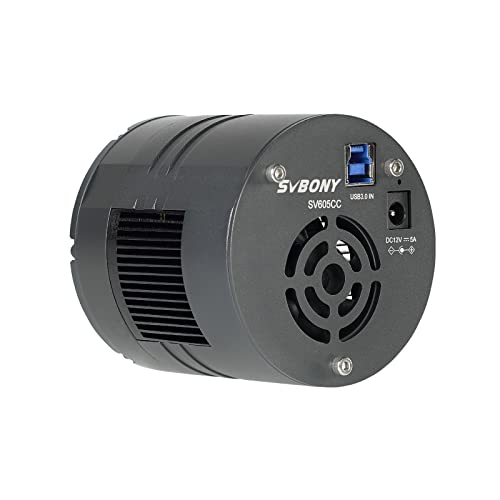
SVBONY SV605CC Cooled Color Astrophotography Camera, 9MP IMX533 Eyepiece | Double Layer Semiconductor Refrigeration, USB3.0, 30 ℃ Lower for Deep Sky Astrophotography Panoramic Astronomy &Lucky Imaging
Who it’s for: Imagers who want cooled color capture for deep sky, panoramic, and lucky imaging with a moderate-resolution sensor.
Key specs
- IMX533 back-illuminated sensor, 9MP
- Double-layer semiconductor cooling, rated up to 30 °C below ambient
- USB 3.0 interface
Pros
- Cooling range is a practical advantage on warm nights.
- 9MP resolution is a good balance between field of view and detail.
- Suits both deep sky and planetary-style lucky imaging.
Cons
- Cooling draws power, so a portable power source is needed in the field.
- Needs careful dew management on humid nights.
DWARFLAB Dwarf 3 Smart Telescope, App-Controlled Astrophotography Camera

DWARFLAB Dwarf 3 Smart Telescope, App-Controlled Astrophotography Camera | Portable 3lb Design, 4K Auto-Tracking, AZ/EQ Modes, Built-in Processing, Astronomy Shooting, Wildlife and Panorama Imaging
Who it’s for: Travelers and casual imagers who want a light, self-contained smart telescope that handles tracking and processing.
Key specs
- Portable body rated around 3 lb
- 4K auto-tracking
- AZ and EQ mounting modes with built-in processing
Pros
- Light enough to carry to dark-sky sites without a heavy mount.
- Supports astronomy, wildlife, and panorama shooting in one unit.
- App-based workflow keeps setup simple.
Cons
- Small optics limit how faint the deep sky targets can be.
- Less flexible for users who want to upgrade individual components later.
SVBONY SC571CC Cooled Color Astronomy Camera, IMX571 CMOS APS-C Sensor

SVBONY SC571CC Cooled Color Astronomy Camera, IMX571 CMOS APS-C Sensor | Front-Window Glass Heater, Prevent Dew and Condensation, USB 3.0 TypeC, High Resolution Telescope Camera for Astrophotography
Who it’s for: Serious deep sky imagers with a capable mount and a telescope that can cover an APS-C sensor without heavy vignetting.
Key specs
- IMX571 CMOS APS-C sensor
- USB 3.0 Type-C connection
- Front-window glass heater to prevent dew and condensation
Pros
- APS-C format offers a wide field for galaxies and large nebulae.
- Built-in glass heater addresses a common frustration on cold nights.
- High resolution rewards good seeing and accurate tracking.
Cons
- Large sensor requires a telescope with a full-frame-capable image circle, which adds cost to the setup.
- Generates large files, so storage and processing time grow quickly.
Celestron NexImage 20 Solar System Imager, Lunar and Planetary Camera

Celestron NexImage 20 Solar System Imager – Lunar & Planetary Camera, Color | Beginner Planetary Imaging Camera, 20MP AR2020 Back-Illuminated CMOS Sensor, High-Res, Built-In Autoguiding, USB-C Connect
Who it’s for: Beginners focused on the Moon and planets who want a straightforward imager that can also support simple deep sky experiments.
Key specs
- 20MP back-illuminated CMOS sensor
- Built-in autoguiding
- USB-C connection
Pros
- Built-in autoguiding simplifies planetary and lunar capture.
- High resolution captures fine lunar and planetary detail.
- USB-C connection is convenient with modern laptops.
Cons
- Not cooled, so it is less suited to long-exposure deep sky work.
- Planetary focus means dim nebulae and galaxies are a stretch.
SVBONY SV705C Telescope Camera Eyepiece, IMX585 USB 3.0 Astronomy Camera

SVBONY SV705C Telescope Camera Eyepiece, IMX585 USB 3.0 Astronomy Camera | "1/1.2” Frame, Astronomy Camera, High Resolution Planetary Camera, for Moon, Saturn, Planets and Deep Sky Astrophotography "
Who it’s for: Observers who want one camera for planets, the Moon, and deep sky targets, and who accept an uncooled sensor.
Key specs
- IMX585 sensor in a 1/1.2-inch frame
- USB 3.0 interface
- Eyepiece-style body
Pros
- Versatile: suits planetary, lunar, and some deep sky work.
- Eyepiece-style body fits standard telescope focusers.
- Sensitive sensor helps with shorter exposures on brighter targets.
Cons
- Uncooled, so thermal noise limits long deep sky exposures.
- Smaller frame than APS-C options narrows the field of view.
Buying Guide
Deep sky imaging is about collecting many long exposures and stacking them. The camera’s job is to record as much faint signal as possible while adding as little noise as it can. That makes a few specifications more important than the rest.
Selection criteria
- Cooling: Thermoelectric cooling reduces dark current and amp glow, which matters most on exposures of a minute or longer.
- Sensor size and format: Larger sensors (APS-C, 4/3-inch) give a wider field; smaller frames give more magnification but a narrower view.
- Color vs. mono: Mono cameras with filters are efficient for narrowband targets; color cameras are simpler and more flexible.
- Interface: USB 3.0 and USB-C are the common standards for fast frame transfer.
Important features
- Quantum efficiency at the wavelengths you care about, usually reported by the manufacturer as a curve.
- Read noise and dark current specifications.
- Dew prevention (a front-window heater or a dew strap) for humid nights.
- Software compatibility with your capture and stacking programs.
Specs to check
Check the sensor model, pixel size, cooling range, interface, and whether the camera is designed for an eyepiece-style or a standard camera port. Pixel size should match your telescope’s focal length for good sampling. Confirm the image circle covers your sensor before buying a large chip.
Choosing by need
- Beginners with a manual setup: a cooled color camera at the entry level.
- Push-button imaging: a smart telescope system.
- Wide-field galaxies and nebulae: a larger APS-C sensor paired with a suitable telescope.
- Planets and the Moon: a high-resolution planetary camera with autoguiding.
Things to watch out for
- A camera alone does not fix poor tracking. Long exposures need a mount that can guide accurately.
- Cooled cameras need stable power, especially in the field.
- Large sensors can show vignetting or uneven illumination if the telescope’s image circle is too small.
- Expect a learning curve with stacking software and calibration frames.
FAQ
Do I need a cooled camera for deep sky astrophotography?
Not always, but cooling helps most on long exposures. Cooling lowers thermal noise, so it becomes more valuable as your exposures get longer and your targets get fainter.
Is a color or mono camera better for deep sky?
Mono cameras are more efficient with narrowband filters and produce clean data for specific emission lines. Color cameras are simpler to use and work well for broadband galaxies and nebulae.
Can I use a planetary camera for deep sky targets?
You can try, but planetary cameras are usually uncooled and have smaller frames or shorter exposure capabilities. They are best for the Moon and planets, with deep sky work as a secondary use.
What is pixel size, and why does it matter?
Pixel size combined with telescope focal length determines image sampling. Good sampling captures fine detail without wasting resolution. Many imagers aim for an image scale that matches their local seeing and mount accuracy.
Do smart telescopes replace a dedicated camera?
Smart telescopes simplify the process with built-in tracking and processing. They suit beginners and travelers. Dedicated cameras offer more control and better performance on the faintest targets.
What else do I need besides a camera?
You will need a computer, capture software, stacking and processing software, and a mount that can track accurately for minutes at a time. Power, dew control, and a stable setup are also important. Consult an experienced imager or a local astronomy club for guidance on your specific equipment.
Conclusion
For a manual telescope setup on a budget-friendly path, the SVBONY SV405CC offers cooling and a useful sensor size. For hands-off imaging, the ZWO Seestar S30 Pro and DWARFLAB Dwarf 3 suit beginners and travelers. Imagers who want cooled color with a bigger sensor should look at the SVBONY SV605CC or SC571CC, paired with a capable mount. For planets and the Moon, the Celestron NexImage 20 is the most focused choice, while the SVBONY SV705C is a versatile middle ground. Match the camera to your telescope, mount, and the targets you most want to photograph, and you will get better results than chasing specifications alone.
Related reading
About the author

astronomysite editorial team writes reviews and buying guides for Astronomy Site.